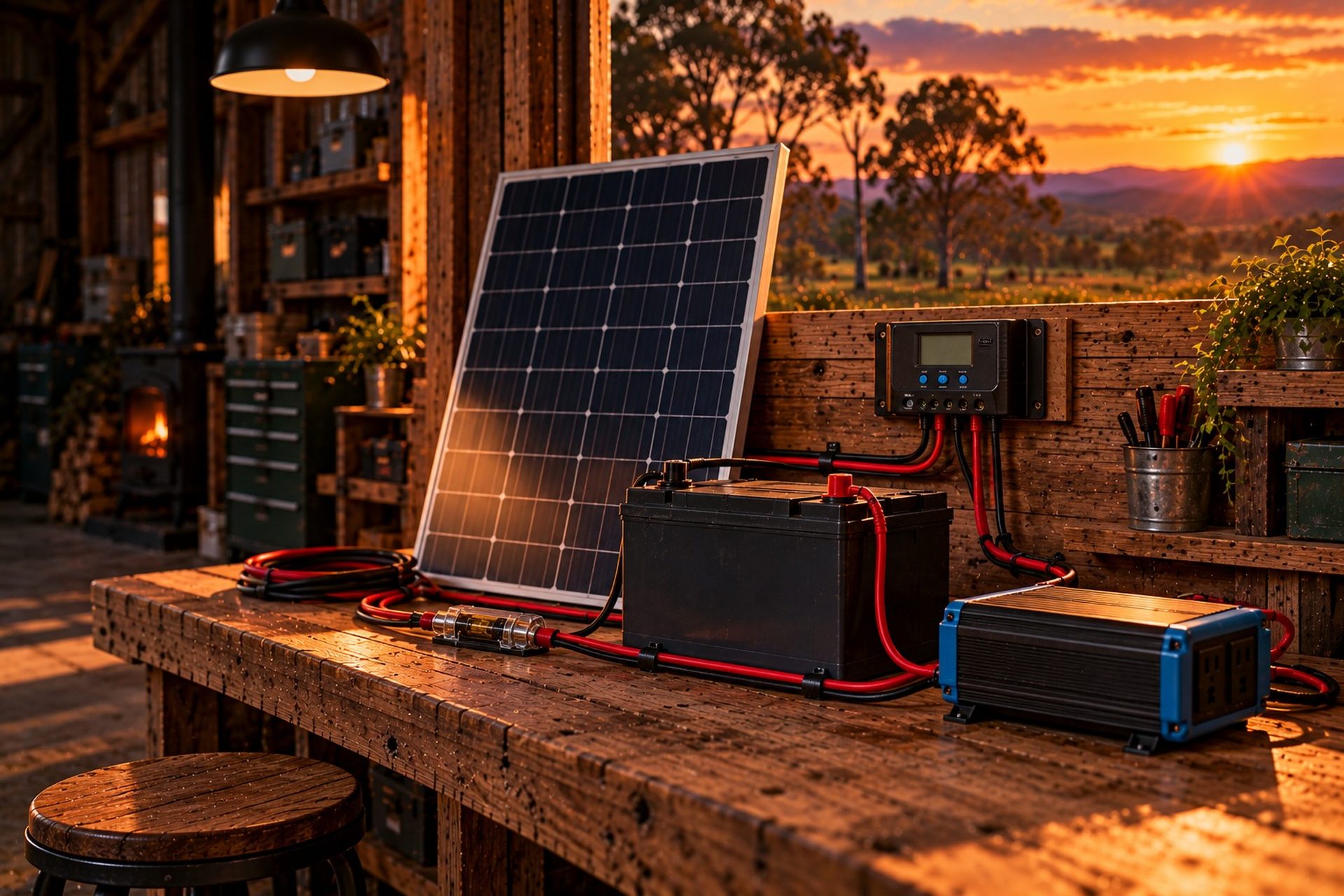
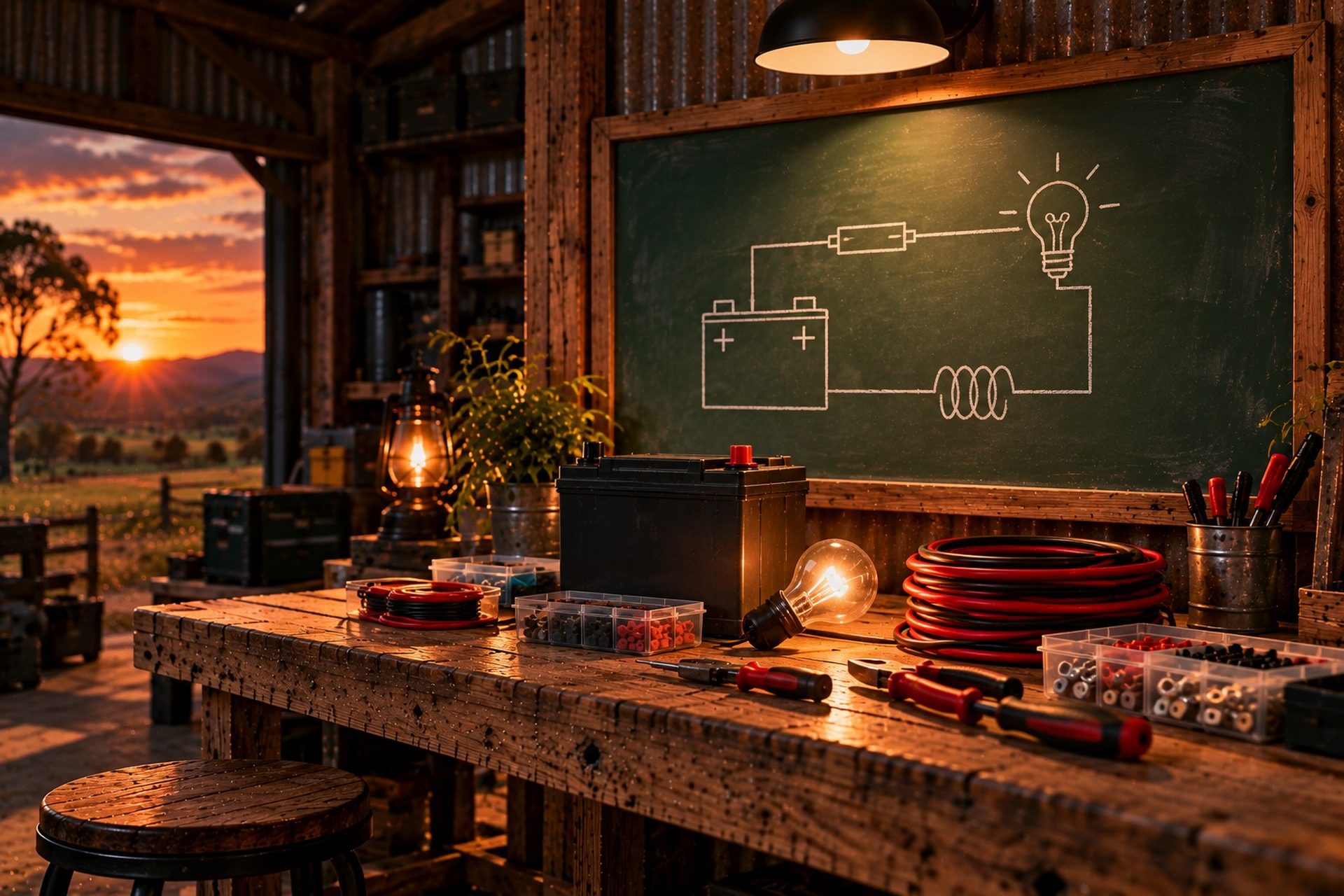
An inverter makes household-style power from a battery. Here is what happens inside.
An inverter takes DC from a battery and switches it rapidly to make AC that can run household-style appliances.
1. What happens inside
Electronic switches turn the battery current on and off very fast, back and forth, and a transformer or high-frequency circuit steps the voltage up to 240V AC (nominally 230V AC in Australia).
2. Pure sine vs modified sine
- Pure sine wave inverters make a smooth wave like the grid. Almost everything runs well on them.
- Modified sine inverters make a stepped wave. Some motors, chargers and electronics run hot, noisy or not at all.
3. Ratings
- Continuous watts: what it can supply all the time.
- Surge watts: a short burst for starting motors and compressors.
- Size for your biggest load's start-up surge.
4. The battery side
Battery current = watts ÷ battery voltage ÷ efficiency. A 1,000W load on 12V takes roughly 90 to 100A. That's why inverter cables are thick and fused close to the battery.
5. Idle draw
An inverter uses some power just being switched on. Turn it off when you aren't using it.
An inverter's output is 240V AC and can kill. Never open an inverter. Connecting an inverter into a building's wiring must be done by a licensed electrician.
6. Quick summary
- Inverters turn DC into AC.
- Pure sine suits nearly everything.
- Size for the surge, and fuse and cable for the battery current.
240V AC mains can kill. In Australia, work on household mains wiring must be carried out by a licensed electrician. Low-voltage DC can still deliver very high current, so treat batteries with respect.