Batteries give you DC. The power point gives you AC. Here is what that means.
Every circuit you work on is either DC (direct current) or AC (alternating current). Knowing which one you have tells you how to measure it, what can run on it and how careful you need to be.
1. DC: one direction
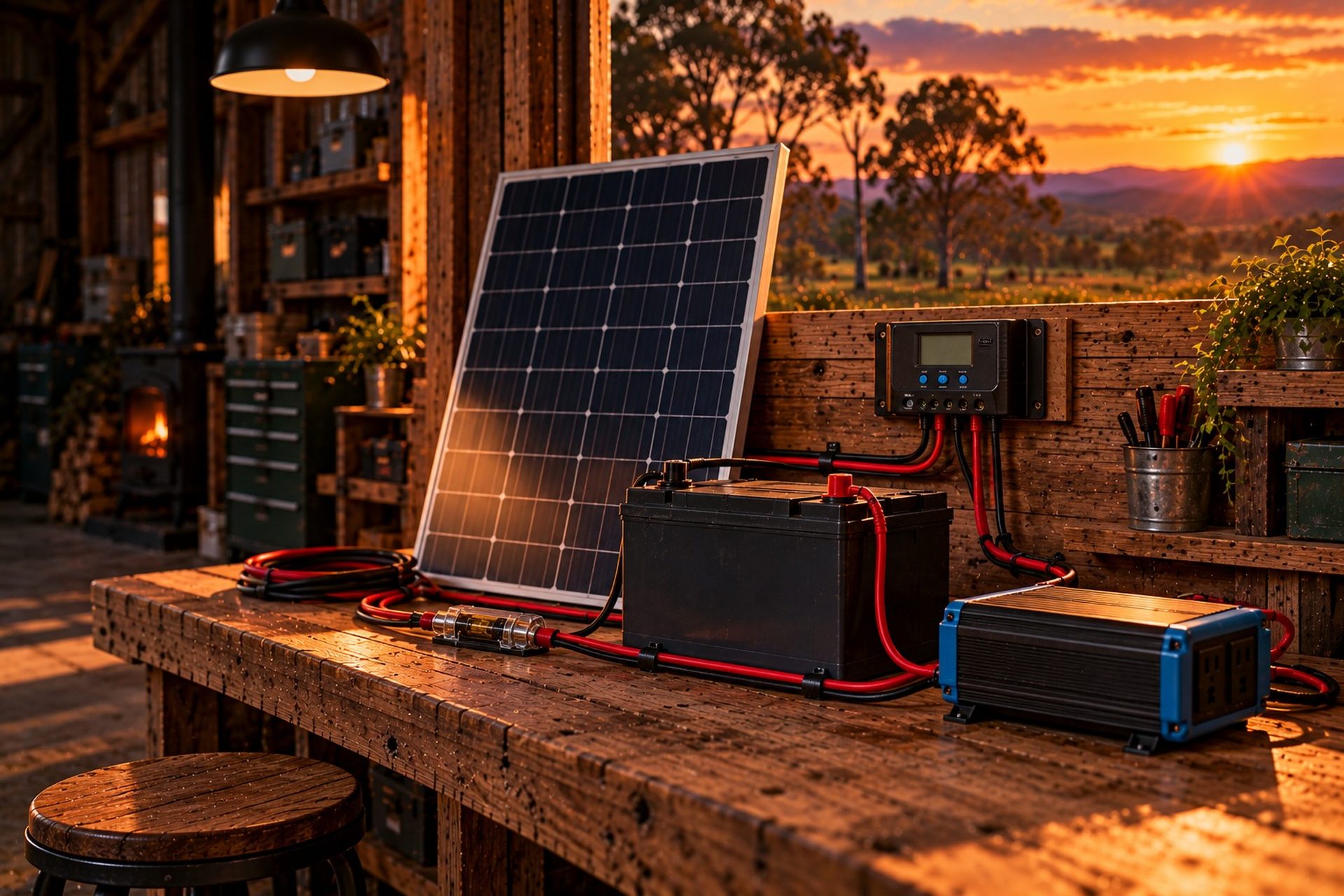
In a DC circuit the current flows one way, from positive, through the load, and back to negative. Batteries, solar panels, USB chargers and 12V vehicle systems are all DC. The voltage stays steady, so a multimeter on DC volts gives a steady reading.
2. AC: back and forth
In an AC circuit the current reverses direction many times a second. Australian mains power changes direction 50 times a second (50 Hz). It is nominally 230V AC, and you'll often measure around 240V AC at a power point. AC is easy to step up and down with a transformer, which is why the grid uses it.
3. Where you meet each one
| Source | Type |
|---|---|
| Car or caravan battery | DC |
| Solar panel | DC |
| Power point at home | AC |
| Inverter output | AC |
| Phone charger output | DC |
4. Changing one into the other
- A charger or power supply turns AC into DC.
- An inverter turns DC into AC.
- Both lose some energy as heat doing it.
5. Measuring them
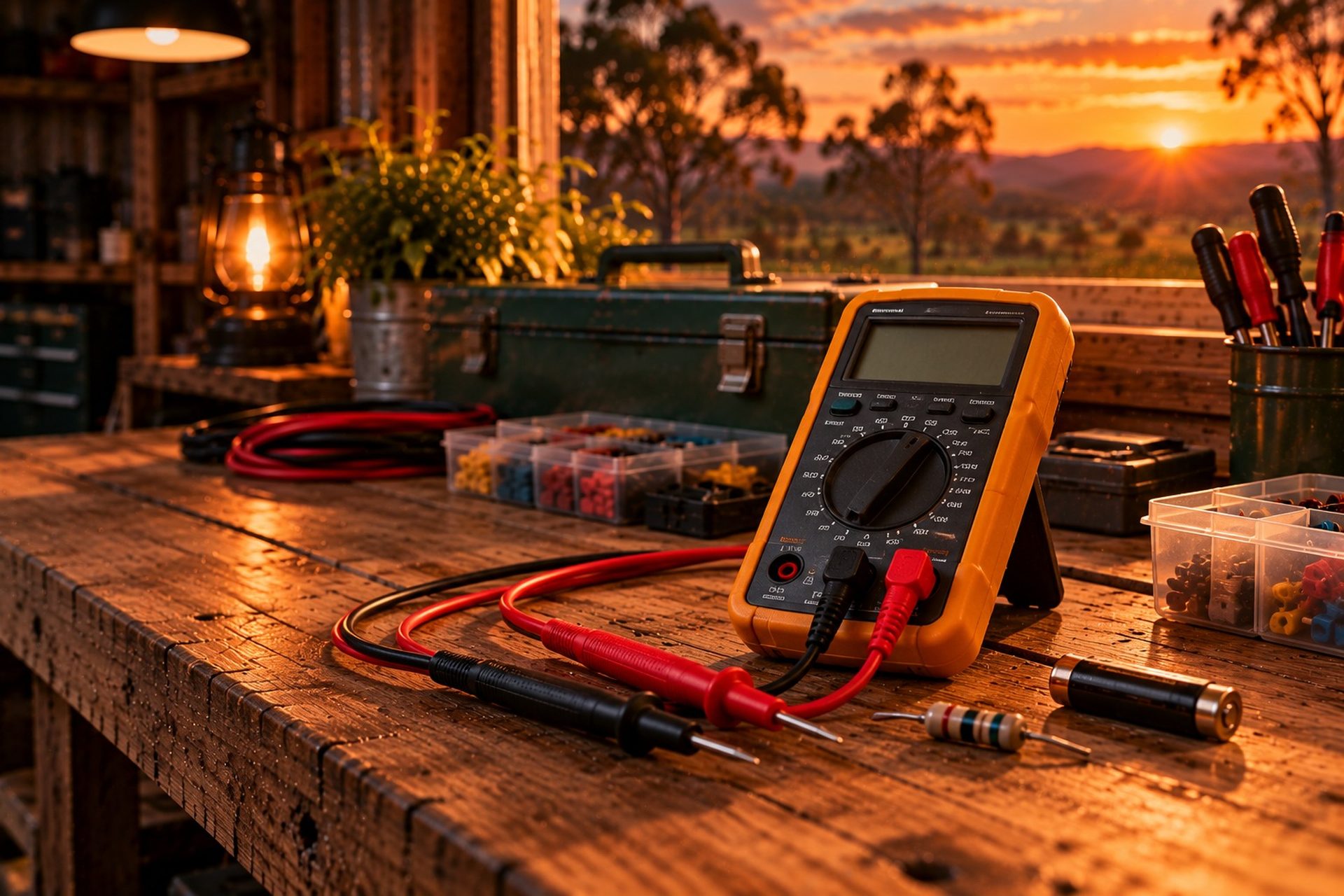
Set your meter to the right type. DC volts usually shows a straight line symbol, AC volts a wavy line. On the wrong setting you can get a reading of zero or a nonsense number.
240V AC mains can kill. In Australia, work on mains wiring must be done by a licensed electrician. Learn and practise on low-voltage DC circuits.
6. Quick summary
- DC flows one way. AC reverses 50 times a second.
- Batteries and solar are DC. Power points are AC.
- Chargers make DC. Inverters make AC.
- Set your meter to the right type before you measure.
240V AC mains can kill. In Australia, work on household mains wiring must be carried out by a licensed electrician. Low-voltage DC can still deliver very high current, so treat batteries with respect.