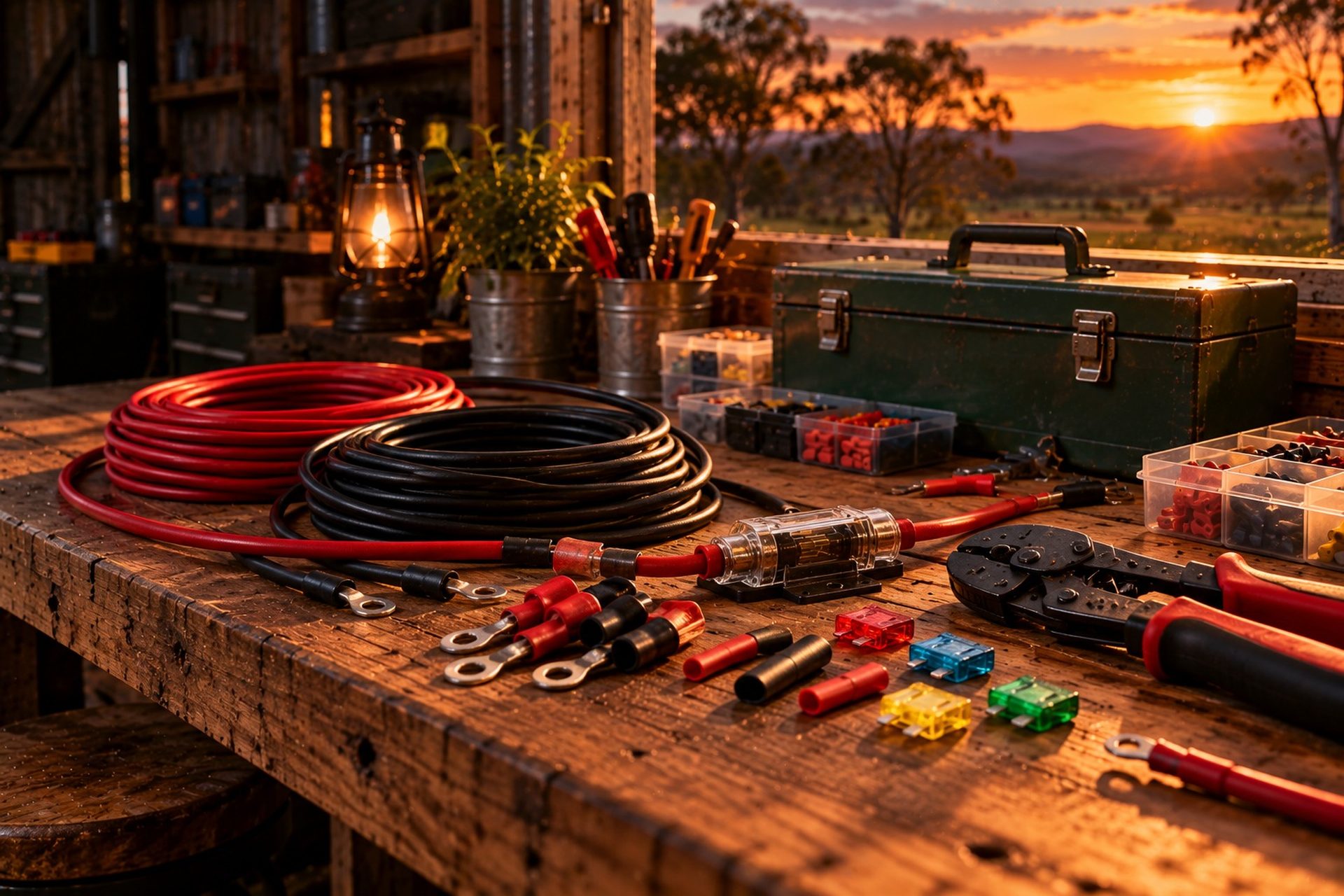
A short is sudden and huge. An overload is slow and sneaky. Both can start fires.
Fuses and breakers protect cables from two kinds of fault: short circuits and overloads.
1. Short circuit
A short happens when positive touches negative (or earth) with almost no resistance in between, often from chafed insulation or a loose tool. Current shoots up to hundreds or thousands of amps from a battery. Wires can glow, melt and start a fire in seconds.
2. Overload
An overload is more current than the cable is built for, but not a dead short. Too many devices on one circuit, a seized motor, or an undersized cable. It heats the cable slowly and can still start a fire.
3. What fuses really protect
A fuse protects the cable, not the device. Pick a fuse that blows below the cable's current rating, and put it as close to the battery as practical.
4. Fuse vs breaker
- Fuses are cheap and fast. Replace with the same rating.
- Circuit breakers can be reset. Check they're DC-rated for DC circuits.
5. Never upsize
If a fuse keeps blowing, find out why. A bigger fuse just moves the failure to the wiring.
6. Quick summary
- Short = sudden huge current. Overload = too much current for too long.
- Fuses protect the cable.
- Fuse close to the source.
- Never fit a bigger fuse to stop it blowing.
240V AC mains can kill. In Australia, work on household mains wiring must be carried out by a licensed electrician. Low-voltage DC can still deliver very high current, so treat batteries with respect.