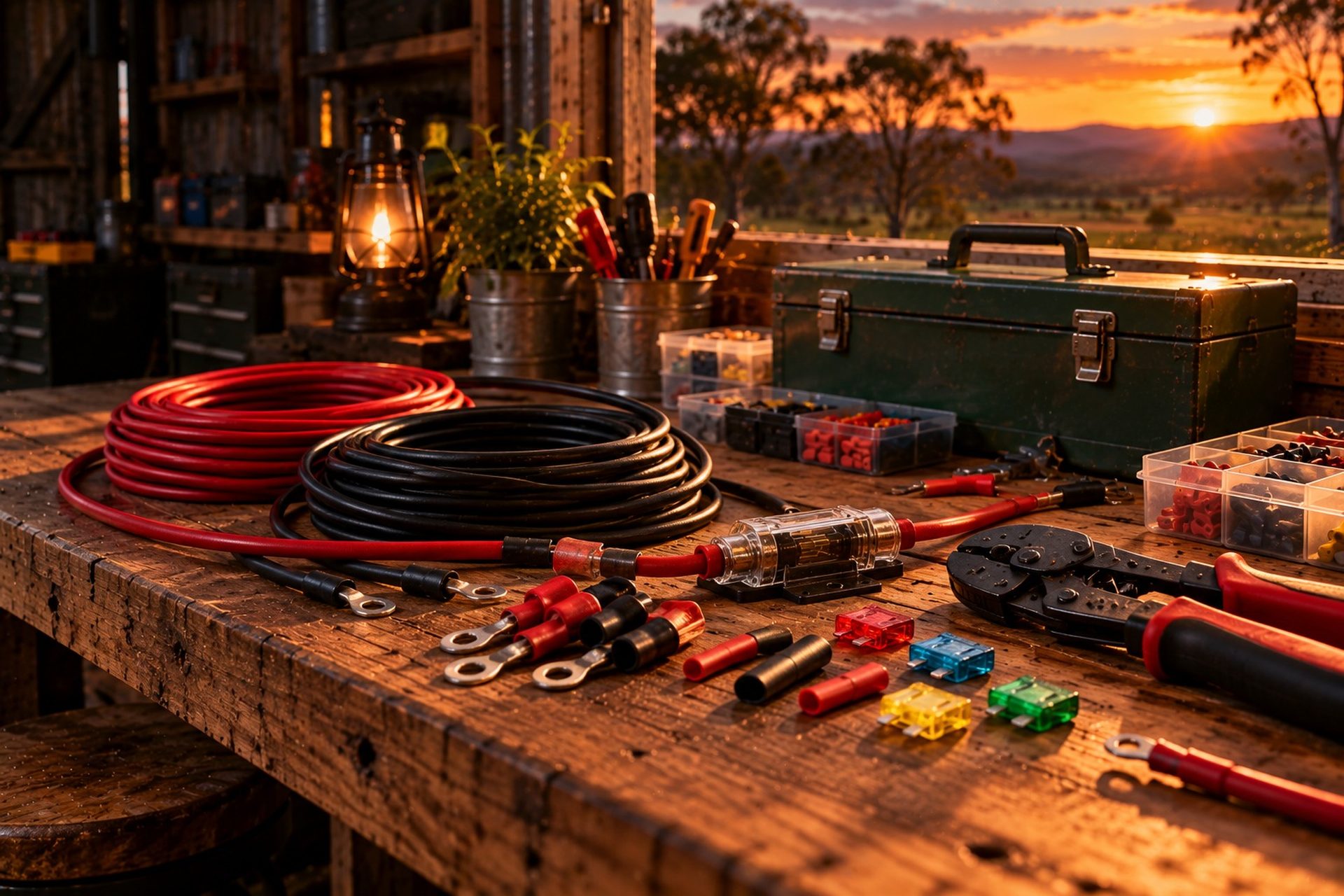
A good crimp is as strong as the wire. A bad one is a fault waiting to happen.
A crimp squeezes a metal terminal around a wire so tightly the two act as one. It's the standard way to terminate cables in vehicles and caravans.
1. Match everything
- Terminal to wire size. The barrel must suit the cable's cross-section.
- Crimper to terminal. Use a ratchet crimper with dies made for that terminal type. Pliers and cheap squeeze crimpers make weak joints.
- Lug to stud. Ring terminals must fit the stud size.
2. Step by step
- Strip only as much as the barrel needs. No loose strands should poke out, and no insulation should go inside the barrel.
- Twist the strands lightly and push them fully into the barrel.
- Put the terminal in the correct die, with the seam facing the right way for that tool.
- Squeeze until the ratchet releases.
- Fit heatshrink or the terminal's own insulation.
3. Test it
- Pull test: give it a firm tug. It shouldn't move.
- Look: strands visible at the end of the barrel, insulation close to the barrel.
- Heat: after running the load, a warm terminal points to a poor crimp.
4. Big battery cables
Heavy lugs need a hydraulic or hammer crimper made for that size. Undersized crimps on big cables can get very hot under load.
5. Quick summary
- Right terminal, right crimper, right strip length.
- Pull test every crimp.
- A warm crimp is a bad crimp.
240V AC mains can kill. In Australia, work on household mains wiring must be carried out by a licensed electrician. Low-voltage DC can still deliver very high current, so treat batteries with respect.